
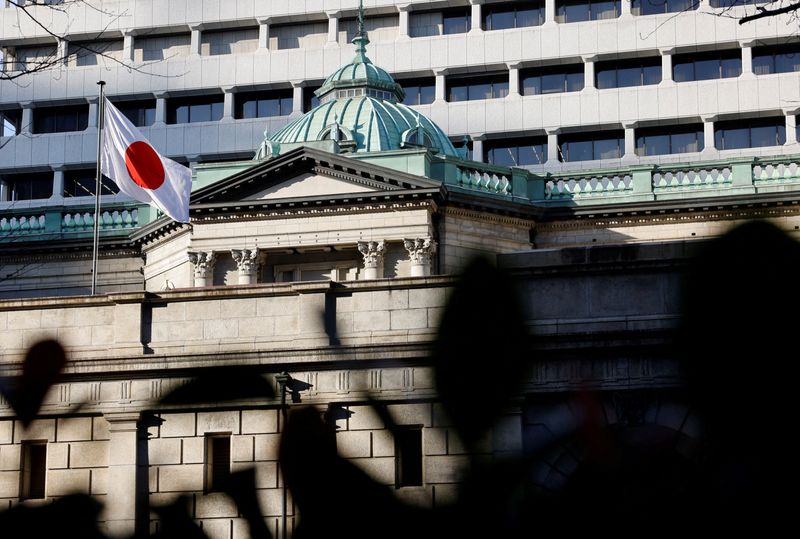

Analysis-BOJ puts self defense ahead of solidarity with Fed’s Powell
By Leika Kihara
TOKYO, Jan 14 (Reuters) – The Bank of Japan’s absence from a list of central banks lining up to support Federal Reserve Chair Jerome Powell reflects its aversion to politics and the government’s reluctance to cross the U.S., with an early election on the horizon.
In a sign of the sensitivity of the matter, the BOJ informally consulted the government about whether to sign the joint statement, but officials were not able to say yes in time for its release, according to two government sources.
“The reason we couldn’t immediately say yes is partly because of our relationship with the U.S.,” one of the sources said on condition of anonymity due to the sensitivity of the matter.
A spokesperson for the BOJ declined to comment. The government’s top spokesperson, Minoru Kiuchi, also declined to comment, saying on Wednesday the matter fell under the central bank’s umbrella.
In a rare joint statement on Tuesday, central bank chiefs from around the world stood shoulder to shoulder with Powell after the Trump administration threatened him with a criminal indictment – a sign of their fear that the move could imperil global central bank independence.
While BOJ Governor Kazuo Ueda has stressed the importance of independence, he has refrained from commenting on U.S. President Donald Trump’s attacks on the Fed.
The BOJ’s decision not to sign the statement was in line with its long-held practice of withholding comment on controversial and political topics, analysts say, which likely derives from Japan’s history of political meddling in monetary policy.
But it might also reflect the BOJ’s desire to avoid stepping into Trump-related controversy as Prime Minister Sanae Takaichi – who touts her close relationship with her American counterpart – stands at the precipice of an early election in February, some analysts said.
“The BOJ’s decision is in line with its protocol,” said former BOJ board member Takahide Kiuchi. “But it also shows how it’s not completely independent from government interference.”
“Criticising U.S. policy could put Japan’s government under heat from Trump,” said Kiuchi, who today serves as an economist at Japan’s Nomura Research Institute. “It’s safest to avoid making any comment on what’s happening overseas.”
Elsewhere in the Asia-Pacific region, New Zealand’s foreign minister rebuked the country’s central bank chief for signing the statement in support of Powell.
THE BOJ IS NOT IMMUNE
Leave a Comment
Your email address will not be published. Required fields are marked *