

It’s been almost a year since Lip-Bu Tan took on the Intel (INTC +4.91%) CEO role. Since then, the U.S. government, Nvidia, and Softbank have all invested in the chip giant. Intel also began high-volume manufacturing of its 18A node, marking the culmination of former CEO Pat Gelsinger’s “five nodes in four years” plan to catch up to Taiwan Semiconductor Manufacturing (TSM +5.48%).
After an impressive 84% gain in 2025, Intel stock marked a 26% gain in January after management formally unveiled its first 18A chip, Panther Lake, for laptops, which are now shipping.
Last week, Lip-Bu Tan sat down for an interview at the Cisco AI forum, where he gave Intel shareholders even more things to look forward to in 2026.

Today’s Change
(4.91%) $2.37
Current Price
$50.61
Key Data Points
Market Cap
$253B
Day’s Range
$48.84 – $51.30
52wk Range
$17.66 – $54.60
Volume
52K
Avg Vol
102M
Gross Margin
34.77%
CPU demand is skyrocketing for AI use
One of the knocks on Intel over the past few years is that it didn’t develop a credible Nvidia competitor in the AI GPU space. However, CPU-based server demand is now skyrocketing, likely a consequence of AI moving from the model-training phase to agentic inference. That’s when enterprises begin to employ agents to execute everyday tasks, which actually requires a lot of traditional CPU compute. Tan confirmed this at the conference:
From the compute side, customers are all crying for more products, and I did not prepare the production enough to meet their requirements. And so I think people are starting to find out that in application, CPU is actually more useful in terms of performance, for all the compute requirement. And a friend of mine mentioned that Moore’s Law, it used to double every three to four years, and now it’s like three or four months. And so the pace of compute is increasing so much. … Almost every CEO [calls] me up and [says], “Lip-Bu, can I have more?”
Intel management did guide that its server CPUs would be down sequentially in the first quarter, but this is entirely due to undersupply, with Intel having sold down most of its “buffer” inventory last quarter. New supply should come online at the end of the first quarter, after which Intel should see a sharp increase in its data center segment.
But not only should Intel sell greater volumes of CPUs in 2026, it should also do so at higher prices. On Friday, Reuters reported that Intel will raise its server CPU prices by 10% for Chinese customers.
Intel’s Data Center and AI (DCAI) segment only generated $16.9 billion in 2025, but its prior peak was $26.1 billion in 2020. 2020 was also before Intel had built its massive fab 34 in Ireland, where it produces its latest Granite Rapids server processors on the Intel 3 node. Meanwhile, Intel’s “Diamond Rapids” CPU built on 18A should be out late this year or early next year. These are more competitive products, so it wouldn’t be a surprise if agentic AI demand catapults Intel’s DCAI segment past its 2020 high-water mark.
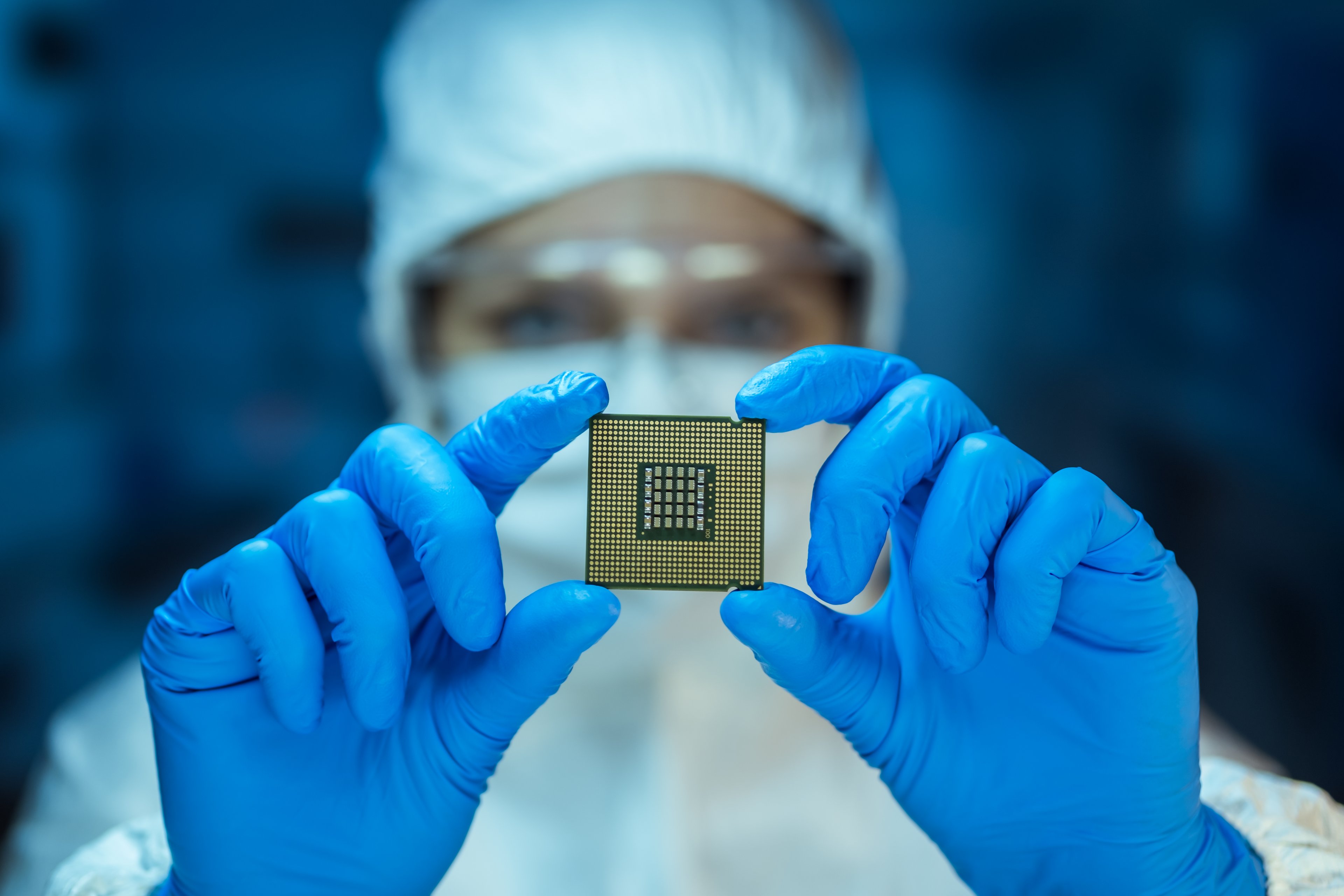
Image source: Getty Images.
“A couple of customers knocking on my door”
Early in the interview, Tan also noted that given the recent success of Panther Lake, “customers are now knocking on my door” to try out Intel foundry for the upcoming 18AP and 14A nodes.
Former CEO Pat Gelsinger had attempted to land outside customers to produce chips on Intel’s foundry in 2024, but didn’t manage to close any significant deals. This could be because customers weren’t sure how 18A would turn out. Tan also noted yields were relatively low as 18A began to ramp roughly a year ago. That may have also scared off potential foundry clients, who need their foundry to produce reliable volumes.
But in the interview, Tan said he had recruited outside suppliers to help Intel improve its 18A yields last year, and that things are now looking better, with yields improving 7% to 8% per month.
With excellent reviews for Panther Lake-based laptops showing 18A is a competitive technology and Tan’s recent operational improvements, prospective customers now appear to have more confidence to move some production volume to Intel’s foundry. Expect a commitment later this year.
Intel isn’t abandoning new technologies
One of the first things Tan did when he assumed the CEO role was to cut operational costs and lower Intel’s headcount, streamlining what he called a “bloated” organizational structure. Some might have worried that that would mean ending some of Intel’s investment in future technologies.
However, when asked in the interview, Tan elaborated that Intel will still invest in GPUs, noting that he has just hired a GPU architect who is “very good.” Furthermore, Tan also said that Intel is pursuing the use of novel materials to improve the performance of future chips. In particular, Tan mentioned that Intel is still investing in glass substrates, which are considered better insulators than organic substrates today. Tan also mentioned he is looking at using diamond in future products, as it is a much more conductive material than those used in today’s semiconductors.
In light of high demand for traditional CPUs, outside foundry customers now likely to use Intel foundry in some capacity, and Tan’s commitment to futuristic R&D, Tan’s interview at the Cisco summit provided plenty of good news for Intel shareholders, who should be in for another exciting year.