Business owners said that a Supreme Court ruling on Friday striking down sweeping U.S. tariffs could spell relief by lowering their costs and potentially leading to refunds.
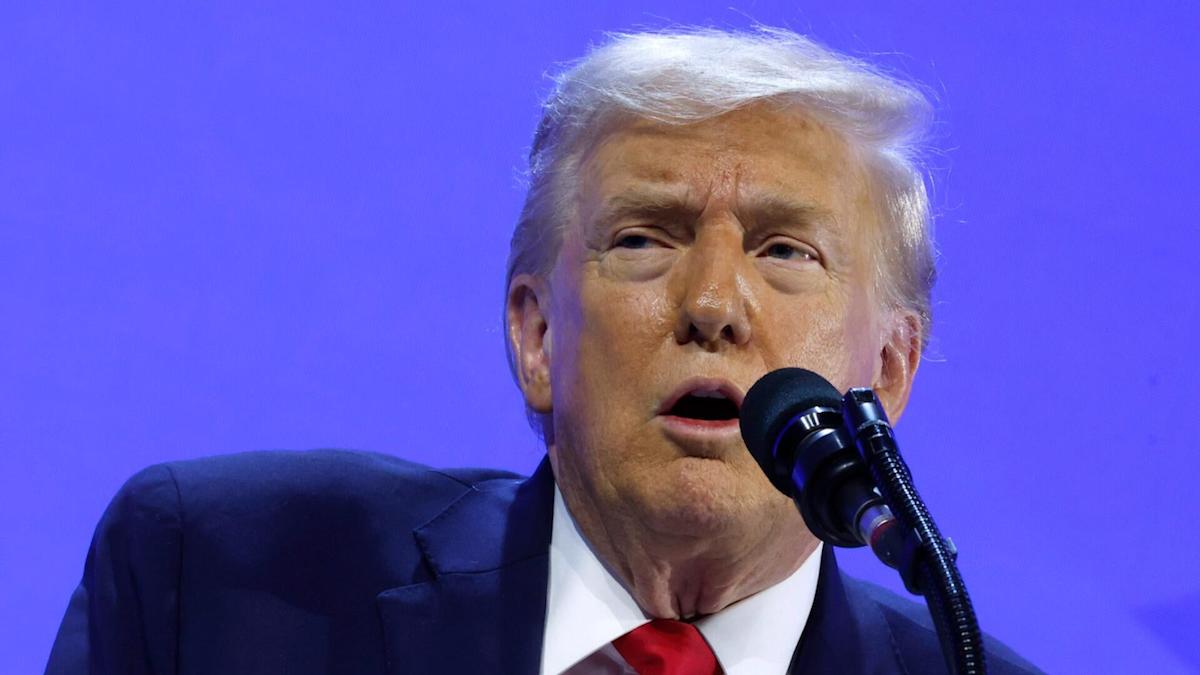
The high court ruled that President Trump does not have the authority to impose levies on imports under the International Emergency Economic Powers Act, or IEEPA. Mr. Trump last year invoked the 1977 law to impose tariffs on dozens of U.S. trade partners, claiming that trade deficits and the flow of fentanyl and other illegal drugs into the U.S. constitute national emergencies.
Beth Benike, co-founder of Busy Baby, which makes mealtime accessories for babies, said that uncertainty about the legal status of the IEEPA tariffs had forced her to halt all imports from China, where the Minnesota-based company’s products are made. She also has inventory in China that her manufacturer is holding for her overseas.
“I should have had it shipped last month, but I was waiting for the Supreme Court decision, because it was the difference between paying an extra $48,000 [in tariffs] or not,” she told CBS News before the Supreme Court issued its long-awaited decision on Friday.
Not all businesses opposed the emergency tariffs. Before the high court’s ruling, Drew Greenblatt, owner of Maryland manufacturer Marlin Steel told CBS News on Friday that he supported higher levies on U.S. trade partners because they provided a “level playing field” that allowed Marlin Steel to better compete with overseas steelmakers.
The average U.S. tariff rate on all imports is around 17%, including levies Mr. Trump imposed under IEEPA, according to the nonpartisan Tax Policy Center. Scrapping the IEEPA duties will drop the average tariff rate to the 7% range, according to Michael Gregory, deputy chief economist at BMO Capital Markets Economics.
A recent analysis from the Federal Reserve Bank of New York found that U.S. businesses and consumers bore the brunt of Mr. Trump’s tariffs in 2025, paying for nearly 90% of the levies. The Trump administration disputes the analysis.
Billions in potential refunds
Scott Lincicome, vice president of general economics at the Cato Institute, a nonpartisan think tank, said the Supreme Court ruling against Mr. Trump’s tariffs nullifies “the biggest and baddest of Trump’s 2025 tariffs.”
“The court’s decision is welcome news for American importers, the United States economy, and the rule of law, but there’s much more work to be done,” he said in an email after Friday’s ruling. “Most immediately, the federal government must refund the tens of billions of dollars in customs duties that it illegally collected from American companies pursuant to an ‘IEEPA tariff authority’ it never actually had.”
The Treasury Department collected $287 billion in tariffs in 2025, up 192% from the previous year, according to the Federal Reserve Bank of Richmond. As of mid‑December, roughly $130 billion had been collected in IEEPA tariffs, although total refunds for businesses could approach $150 billion, according to economists with PNC Financial Services Group.
“I am expecting a full refund, but if for some reason we don’t get them, I would have to raise my prices, which will be tough for consumers,” Benike said. “People buying baby products are already buying new stuff they didn’t have to buy before they had the baby, so they are already squeezed.”
Rachel Rozner, owner of Elden Street Tea Shop in Reston, Virginia, said ahead of the decision that a Supreme Court ruling striking down the IEEPA tariffs could make an “astronomical” difference for her business. Most of the tea and other products she sells come from China, India, Japan and Nepal.
“If I can just order and get the product, and I know the price is good, that will take away a lot of stress,” she told CBS News.
Meanwhile, some experts think the issue of tariff refunds could end up in court.
“[W]e think it’s reasonable to assume a few months would pass before refunds begin, and even longer if the distribution faces significant legal challenges,” Morgan Stanley analysts said in a report.
Although Rozner’s business could be eligible for a tariff refund following the ruling, she expressed concern that she might never see the money.
“What if they run out of money before you’re able to get your refund?” Rozner said. “I’m worried that some people might get refunds and others will not, and that people will take advantage of the system.”
We Pay the Tariffs, an advocacy group of 800 small businesses that opposes the Trump administration’s tariffs, said the IEEPA levies had damaged small businesses by forcing them to take out loans and freeze hiring.
“Today’s Supreme Court decision is a tremendous victory for America’s small businesses, who have been bearing the crushing weight of these tariffs,” the group’s executive director, Dan Anthony, said in a statement to CBS News.
The group also urged the White House to issue “full, fast and automatic refunds” to employers that had paid the tariffs.
Trump announces new 10% tariff
The Trump administration has previously said it can deploy other import duties to replace the IEEPA tariffs. To that end, after the high court’s ruling, Mr. Trump promptly announced he would impose a 10% global tariff under Section 122 of the 1974 Trade Act.
The president also indicated that his administration would expand other existing tariffs, such as levies imposed under Section 301 of the Trade Act and Section 232 of the Trade Expansion Act of 1962.
Section 301 allows the U.S. president to apply country-based tariffs if the U.S. Trade Representative determines that another nation is engaging in unfair trade practices. Section 232 authorizes the president to impose duties on trade partners to protect national security, based on an investigation from the Department of Commerce.
Still, those tariffs are more restrictive than the IEEPA levies, however. Section 122 tariffs are capped at 15% and may remain in force only for 150 days, according to Capital Economics. The tariff rate also must be the same for all trade partners, limiting Mr. Trump’s ability to negotiate different deals with different countries.
Section 301 tariffs also can’t be applied to all foreign imports, according to trade experts. And replacing IEEPA tariffs with substitute levies could also take many months, according to Morgan Stanley.
If businesses could get a boost from the removal of IEEPA tariffs, consumers may not see a dip in prices, with companies such as Walmart recently saying that they are hiking their prices because of the import duties.
“Any consumer looking for relief from tariff-driven price hikes did not find it at the Supreme Court today,” Alex Jacquez, chief of policy and advocacy at Groundwork Collective, a progressive think tank focused on economic issues, said in a statement on Friday.
He added that refunds for businesses could take years to process and that, even if they are eventually administered, “there is little reason to believe companies will pass those savings on to consumers.”
King Charles reacts after former Prince Andrew’s stunning arrest on his 66th birthday
Former Prince Andrew arrested after latest Epstein files revelations
Steel business owner on Trump’s tariffs as world awaits Supreme Court decision


Leave a Comment
Your email address will not be published. Required fields are marked *